

Advanced Rescue Training
Single Rescuer Hub, Spinner & Inside Blade
4.5 hours (1/2 day) - Validity: lifetime
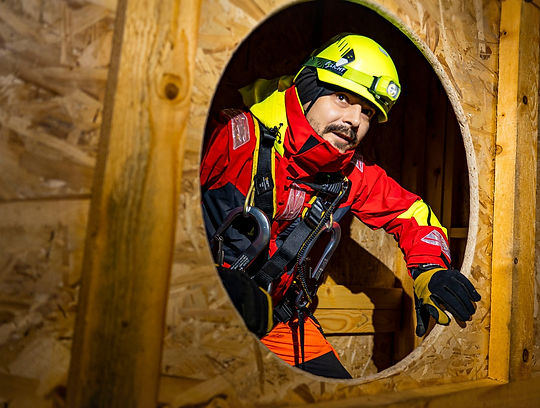
Details:

Duration
4.5 hours (1/2 day)

Validity
Lifetime

Prerequisites
Valid GWO ART-H Advanced Rescue Training, GWO BST Working at Heights, GWO BST First aid, and GWO BST Manual Handling module WINDA records are prerequisites for participation.

Price
-

Location
Str. Carpaților 60, 500269 Brașov, Romania
The GWO Advanced Rescue Training – Single Rescuer Hub, Spinner and Inside Blade module is designed for situations where a rescue must be carried out by one person only.
Building on advanced rescue principles, this module trains participants to independently plan and execute rescue operations in the hub, spinner, and blade areas using safe, controlled techniques.
Key Skills Include:
Planning and executing single-rescuer operations in hub and blade environments
Assessing risks and selecting appropriate rescue strategies when working alone
Safely packaging and evacuating an injured person without team assistance
Operating rescue equipment independently and efficiently
Maintaining personal safety, situational awareness, and casualty control
This module is particularly relevant for technicians working in small teams or remote turbine environments where immediate assistance may be limited.
Valid GWO ART-H Advanced Rescue Training, GWO BST Working at Heights, GWO BST First aid, and GWO BST Manual Handling module WINDA records are prerequisites for participation.
*All prices are subject to VAT where applicable.
*Food and beverages, including lunch, are provided.
Why Choose
WAH Training?
Our mission is to equip professionals with the skills and confidence they need to work safely and efficiently, whether on wind turbine sites, in confined spaces, or at heights. We aim to transform training from a routine requirement into a memorable, engaging experience that truly prepares participants for real-world challenges.

Certified, experienced
instructors.

Equipped with new GWO standard equipment.

Flexible, student-focused approach to learning.

Modern, practical training facilities.

Realistic simulations and individual feedback.

Small groups, quality over quantity.
